On Holding (NYSE: ONON): The 63% Gross Margin Footnote
A deep dive into the Zurich shoe brand — founders, culture, product, athletes, governance, and the FX line that runs under every number.

Photo: On Holding AGOn RunningEditorial use — On Holding press image
I have worn On for years, and I love them. I live just outside Zurich — a short train ride from On's headquarters on Pfingstweidstrasse — and a pair of white Cloud 5s has been my daily shoe through two Swiss winters. The CloudTec sole is the most common silhouette on this city's running paths, and it is what built a small Zurich start-up into a 6 billion CHF listed company in fifteen years.
The company
On Holding AG sells running shoes, performance apparel, and accessories under the On brand. The product wedge is a patented hollow-pod sole called CloudTec — visible foam cylinders under the heel that compress on landing and rebound on push-off — and every shoe in the line, from the entry-level Cloud 5 to the carbon-plated Cloudboom race shoe, is built around it. The catalogue has expanded outward in tight rings: from road running into trail (Cloudultra, Cloudsurfer), training (Cloudpulse), tennis under the Roger franchise, and most recently outdoor/hiking and a small but growing apparel and accessories line. Stock-keeping discipline is unusually tight for a footwear brand at this revenue scale — On has resisted the temptation to chase every adjacent category Nike and Adidas pursue, and the SKU count remains in the low hundreds where peers run into the thousands.
The company was founded in 2010 by Olivier Bernhard, a former duathlon world champion and multiple-time Ironman 70.3 winner who built the first CloudTec prototype by gluing pieces of garden hose to the sole of a running shoe. He was joined by David Allemann and Caspar Coppetti, both ex-McKinsey operators who built the brand and commercial side. Bernhard remains involved as an executive director focused on product and athletes; Coppetti sits on the board. Roger Federer joined as a co-entrepreneur, equity holder, and board member in 2019, and his involvement is operational rather than endorsement — he is credited as a co-designer on the Roger franchise and is a recurring presence in product reviews. The company listed on the NYSE on 15 September 2021 under the ticker ONON at an IPO price of $24.
Martin Hoffmann was promoted from co-CEO/CFO to sole CEO in 2024 when David Allemann transitioned to the board, and On no longer uses the dual-CEO structure that was a defining feature of the early years. The reporting currency is the Swiss franc, headquarters remain at Pfingstweidstrasse 106 in Zurich's industrial west (Kreis 5), and full-time employees were 3,254 at year-end 2025 — headcount has grown sharply with the business and the company is now one of the largest private-sector employers in Zürich-West.
The Zurich headquarters — branded internally as On Labs — is the gravitational centre of the company. It houses product design, the innovation lab, executive functions, and a working prototype shop on the same floor as the founders' desks, which is the cultural signal On sends most deliberately. The workplace culture is closer to a Swiss design studio than a North American athletic brand: flat hierarchy by sportswear standards, deeply product-led, with a recurring internal vocabulary around "the spirit of On" that managers and recruiters reference in public interviews. Average tenure is high for the category, and the company has been able to recruit senior product, engineering, and design talent away from Nike, Adidas, and Apple at a rate that the larger incumbents have publicly acknowledged is uncomfortable. A second hub in Portland, Oregon — opened in 2018 — anchors the North American organisation and sits a short drive from Nike's Beaverton campus, which is part of the talent strategy by design.
The R&D pipeline is what justifies the gross margin. CloudTec was the original wedge, but the technology stack underneath it has compounded: Helion is On's proprietary superfoam, tuned per shoe family; Speedboard is the company's energy-return plate, sitting between the midsole and the CloudTec pods; LightSpray — introduced commercially in 2024 — is a robotic spray-on upper that constructs an entire shoe upper from a single polymer thread in roughly three minutes, with no stitching and no cutting waste. The first LightSpray shoe, the Cloudboom Strike LS, debuted at the Paris Olympics on Hellen Obiri's feet and is the most expensive shoe On has ever shipped — but the bigger story is that LightSpray is a manufacturing platform On owns end to end. Cyclon, an earlier circular-economy experiment built as a subscription-only fully recyclable running shoe, has been quietly scaled back, but the supplier relationships and the materials IP from that program feed directly into the LightSpray work. The patent portfolio sits in the dozens and is actively defended — On has litigated CloudTec against Adidas and several smaller copycats and won on the key claims.
The athlete roster is the other half of the brand engine. Federer is the most visible name, but the running roster is what matters for credibility inside the sport: Hellen Obiri won the Boston Marathon in 2023 and 2024 and the New York City Marathon in 2023, all in On shoes; Yared Nuguse has set American records on the track in On spikes; Olli Hoare has been an On athlete since his collegiate years at Wisconsin. On the tennis side, Iga Świątek joined as the women's signature athlete in 2023 and has played every Grand Slam in On since. Marketing leans premium and culture-adjacent — campaigns with Zendaya and FKA twigs, a deliberate cadence of fashion-week activations in New York and Paris, partnerships with Loewe and PostArchiveFaction on the lifestyle side — and the brand sits intentionally in the gap between Nike's performance scale and Lululemon's premium-lifestyle pricing.
Manufacturing is concentrated in Vietnam and Indonesia, with smaller volumes in China and a small but strategically significant LightSpray line in Switzerland. Regional distribution runs out of Atlanta for the Americas, Zurich for EMEA, and regional centres in Tokyo and Shanghai for APAC. The DTC channel has been the strategic centre of gravity since the IPO: direct-to-consumer (own e-commerce plus owned retail) has climbed steadily and now accounts for roughly 40% of revenue, with own-retail growing the fastest of the three legs. Owned flagship stores sit in the most expensive retail districts of the cities On targets — New York's Soho, Tokyo's Harajuku, London's Regent Street, Paris, Los Angeles, Zurich, Berlin, Miami, Shanghai's Taikoo Li, and most recently Sydney — and each one is a brand statement first and a revenue source second. The wholesale side stays premium: On is in Nordstrom and Selfridges and a curated independent running-specialty list, not in mass discounters.
The share structure is the governance story. Class A ADRs trade on the NYSE and carry one vote per share; Class B founder shares carry ten votes per share and are held by Bernhard, Allemann, Coppetti, Federer, and a small pre-IPO group. The Class B block controls the company independent of the public float, and the dual-class structure does not sunset on a fixed timeline — founder control is durable in a way that should be priced in on both sides of the thesis. Federer's economic stake is in the low single digits of total shares outstanding, but his board seat and product involvement make the equity holding the smaller part of his actual influence on the business. Insider sales since the IPO have been disclosed and scheduled — the founders have sold blocks at pre-announced windows rather than into rallies — and the company has not raised additional equity since listing.
On (NYSE: ONON) is the cleanest pricing-power story in footwear. It is also a Swiss-franc-reporting company that earns more than half its money in U.S. dollars, sells one product category in essentially one geography, and has not delivered a positive total return to the average IPO buyer in four and a half years. The bear case and the bull case both start from the same line on the income statement.
- Revenue grew 10.8x between 2019 and 2025 — from 267 million CHF to 2.88 billion. Gross profit grew 12.6x in the same window.
- Gross margin walked from 53.6% to 62.8% in six years. The CloudTec sole did not get cheaper to make.
- 54% of FY2025 revenue came from the United States. EMEA is 27%, APAC is 18% — and APAC nearly doubled year over year.
- Net income fell from 242 million CHF in 2024 to 195 million CHF in 2025 even as revenue climbed 24%. The gap lives below the operating line, in FX.
- The balance sheet holds 1.02 billion CHF in cash against 141 million CHF of financial debt, 5 million CHF of goodwill, and four straight years of FCF averaging 235 million CHF. It passes every line of the balance-sheet checklist without an asterisk.
- At $33.60 on 12 May 2026, ONON trades below its 15 September 2021 IPO close of $35.00. The S&P 500 is up roughly 50% over the same window.
The balance sheet
The income statement is an opinion; the balance sheet is a list of facts. On's list is short and clean.
Source: www.bearbull.io/market/ONON
The snapshot at 31 December 2025, in CHF:
| Line | FY2025 | FY2021 (IPO year) | Change |
|---|---|---|---|
| Total assets | 2.43 B | 1.16 B | +109% |
| Cash + short-term investments | 1.02 B | 700 M | +46% |
| Financial debt (current + non-current) | 141 M | 95 M | +48% |
| Operating-lease liabilities | 441 M | 175 M | +152% |
| Goodwill + intangibles | 5 M | 4 M | flat |
| Retained earnings | 661 M | (19) M | +680 M |
| Total equity | 1.30 B | 480 M | +171% |
The five-line check, applied to On:
- Cash versus debt. On holds 1.02 billion CHF in cash and short-term investments against 141 million CHF of financial debt — a coverage ratio of 7.2x. Net cash, excluding leases, is 880 million CHF. Even when you add the 441 million CHF of operating-lease liabilities (the retail footprint), the company still sits at 440 million CHF net cash. Pass.
- Long-term debt versus earnings. Long-term financial debt is roughly 90 million CHF against 195 million CHF of net income. The working rule is that a quality business can extinguish its long-term debt with three to four years of earnings; On could do it in six months. Pass.
- Goodwill share. 5 million CHF of goodwill on a 2.43 billion CHF balance sheet — 0.2%. This is an organically built equity base. The brand is not capitalised on the asset side; it is paid for in opex every quarter, which is why the income statement looks heavier than it needs to and the balance sheet looks lighter than it should. Pass with distinction.
- Retained earnings trajectory. The retained-earnings line moved from negative 19 million CHF at IPO to 661 million CHF at FY2025 — 680 million CHF of internally compounded equity in four and a half years, with zero equity issuance after the IPO and zero capital return. The book is being built by the income statement. Pass.
- Current ratio. Current assets of 1.78 billion CHF against current liabilities of 690 million CHF — a current ratio of 2.58. On can pay every twelve-month obligation 2.5 times over from cash and receivables alone. Pass.
The only line that earns a footnote is inventory, at 924 million CHF — 41% higher than 2024 against 24% revenue growth. The rule on inventory for a quality consumer brand: it grows in line with, or slower than, revenue. On did the opposite in 2025. The cash flow statement explains why, and the income statement says whether the bet pays. Even at the inflated level, the survival math is unchanged: 1.02 billion CHF of cash sits above a current-assets line of 1.78 billion CHF against current liabilities of 690 million CHF, so the inventory bulge is being financed out of accumulated operating cash, not short-term debt. That makes the bulge an underwriting question rather than a solvency one.
On could lose half its revenue in 2026 and still meet every supplier payment, every lease, and every payroll out of cash on hand. That is the optionality the income statement is allowed to take risks against. A brand that has to defend a fragile balance sheet cannot launch in APAC, expand into apparel, and refresh CloudTec at the same time. On can.
Equity has compounded from 480 million CHF at the September-2021 IPO to 1.30 billion CHF — a 2.7x expansion in book value with no secondary offering. Book value per share moved from roughly 1.55 CHF to 3.95 CHF. The stock has gone nowhere. Book value has tripled.
The cash flow statement
The second statement to read is the cash flow statement, because cash is the thing that funds buybacks, pays dividends, retires debt, and refills the cash line we just admired. Reported earnings are an estimate; free cash flow is a withdrawal slip.
Source: www.bearbull.io/market/ONON
Five years of operating cash and FCF, in CHF millions:
| FY | OCF | CapEx | FCF | Net income | FCF / NI |
|---|---|---|---|---|---|
| 2021 | 23 | 47 | (24) | 58 | (0.41) |
| 2022 | 113 | 56 | 57 | 58 | 0.98 |
| 2023 | 232 | 47 | 185 | 80 | 2.31 |
| 2024 | 511 | 65 | 446 | 242 | 1.84 |
| 2025 | 323 | 70 | 253 | 195 | 1.30 |
| 2022-25 cumulative | 1,179 | 238 | 941 | 633 | 1.49 |
Read the cumulative ratio. Across the four post-IPO years, On generated 941 million CHF of free cash flow against 633 million CHF of cumulative net income — a 1.49x ratio. Every accounting franc of profit has been backed by roughly 1.49 francs of free cash. This is the opposite of an accrual-heavy income statement; it is the signature of a working-capital-light brand model with disciplined CapEx.
CapEx intensity is the under-discussed line. 70 million CHF on 2.88 billion CHF of revenue is 2.4% of sales. For a company opening flagship retail in Tokyo Aoyama, London Regent Street, and Shanghai West Bund — and building a wholesale fulfilment centre in Atlanta — this is a deliberately small number. On's production is third-party in Vietnam and Indonesia, so the manufacturing capital sits on contract-manufacturer balance sheets rather than On's. Compare:
- Nike: roughly 1.9% CapEx-to-sales.
- Lululemon: roughly 6.5% (owned retail-heavy).
- Deckers: roughly 1.5% (wholesale-heavy, owned-DC-light).
On sits between Nike and Deckers — asset-light enough to convert earnings to cash, owned-retail enough to capture the D2C gross-margin uplift.
The 2025 FCF compression is mechanical, not structural. FCF fell from 446 million in 2024 to 253 million in 2025 — a 43% drop — while operating income grew 70%. The entire delta lives in working capital. Inventory rose by 268 million CHF (924 million end of 2025 vs. 656 million end of 2024), or 41% versus a 24% revenue print. The build was deliberate:
- Apparel rollout requires SKU depth on a category that turned only 170 million CHF of revenue in 2025.
- APAC distribution buildout needs forward stock in Shanghai and Tokyo before the sell-through prints.
- The CloudTec next-generation refresh due in H2 2026 needs introductory inventory in transit.
Either the inventory sells through in 2026 and FCF snaps back to the 400-500 million CHF range, or it sits and gets discounted — which would compress the 62.8% gross margin that is the entire reason this stock has a multiple. The Q2 2026 inventory-days disclosure is the single most important data release for the bull case.
Share-based compensation was 47 million CHF in 2025 — 1.6% of revenue, or 24% of net income. This is real dilution and it is reported above the line. The fully diluted share count moved from roughly 313 million at IPO to 327 million at FY2025 — a 4.5% increase over four and a half years. Not aggressive by US-tech standards; not zero, either.
Capital allocation. On has not paid a dividend, has not repurchased shares in size, and has not made a meaningful acquisition. Cumulative free cash flow has compounded into a treasury-yield earning cash pile of north of 1 billion CHF. The test on retained earnings is unforgiving: every franc kept on the balance sheet must, over time, generate more than one franc of incremental market value. On has not yet been forced to defend the test, because the operating runway has been long enough that retention has been correct by default. The first capital-return decision — buyback, special dividend, or M&A — is the one the market will read for management's actual view of reinvestment runway.
The income statement (now that the company is solid)
Balance sheet: clean. Cash flow: 1.49x covered. We have earned the right to talk about growth.
Source: www.bearbull.io/market/ONON
Revenue in millions of CHF:
| Fiscal year | Revenue | YoY growth |
|---|---|---|
| 2019 | 267 | — |
| 2020 | 425 | +59% |
| 2021 | 725 | +70% |
| 2022 | 1,222 | +69% |
| 2023 | 1,792 | +47% |
| 2024 | 2,318 | +29% |
| 2025 | 2,879 | +24% |
Six years. One direction. Revenue is up 10.8x, and 2025 was the first year On printed positive growth in every quarter while keeping operating margin in double digits.
The net-income line is the loud one. Net income jumped from 80 million CHF in 2023 to 242 million in 2024, then fell to 195 million in 2025. That decline came on top of 24% revenue growth and a 70% jump in operating income (211 million → 360 million). The gap between operating profit growing and net profit shrinking is FX. CHF strengthened against USD through 2025, and On has to retranslate U.S. dollar revenue back to francs at the close. The accounting hit shows up below the operating line, in financial expenses and tax. In rough order-of-magnitude terms, the 149-million CHF operating-to-net gap that opened up between 2024 and 2025 is roughly two-thirds non-cash FX translation on the unhedged USD asset base; the remainder is higher effective tax. Operating cash is intact; reported cash earnings are smaller because the franc got expensive.
This matters because the U.S. is 54% of the business. A 5% move in USD/CHF is a real number on the bottom line, and a slower U.S. — for any reason — compounds the FX problem in the same direction the operating leverage is supposed to compound the other way.
Source: www.bearbull.io/market/ONON
Quarterly growth has decelerated cleanly from triple digits in 2022 to a 22–27% band in 2024–2025. That is the trajectory the market is pricing — and the trajectory On has to defend.
Margins: the actual story
Source: www.bearbull.io/market/ONON
Gross margin in 2019: 53.6%. Gross margin in 2025: 62.8%. That is a 920 basis-point expansion over six years. For context:
- Nike ran a 44.6% gross margin in FY2024.
- Adidas ran 50.8% in FY2024.
- Deckers, the parent of Hoka, ran 55.6% in FY2024.
A 920 basis-point gross-margin expansion in six years, on a product base that did not get cheaper to build.
On is operating at a gross-margin level that has historically been reserved for luxury houses, not running brands. The expansion did not come from cost reduction — On's product cost is broadly stable as a percentage of wholesale price. It came from three places at once:
- Direct-to-consumer mix shift. D2C — On's own e-commerce plus its 50+ owned stores — carries gross margins 15-20 points higher than wholesale. D2C share of revenue has climbed from roughly 30% at IPO to north of 40% in FY2025.
- Price discipline. Average selling prices on flagship Cloudmonster and Cloudsurfer lines have risen 8-12% over the cycle. On has not run an end-of-season promotion in core channels.
- Premium positioning. The Cloudboom Echo 3 retails at 290 USD. The brand has earned the right to charge it.
Operating margin tells a flatter story — 2.1% in 2019, 12.5% in 2025. The compression between gross and operating margin is SG&A. On has spent aggressively on brand and on team buildout. The Federer co-entrepreneur arrangement (2019), the Iga Świątek tennis partnership (signed 2024), and the Zendaya / Law Roach CloudZone Moon FW25 campaign announced August 2025 are not endorsement line items in the conventional sense — they are equity in cultural relevance, paid for through SG&A every quarter. The bull view is that 2025's 12.5% operating margin is a temporary plateau and that the medium-term target — On guides to a "mid-to-high-teens" operating margin — is mechanically achievable as the brand spending normalizes against a growing revenue base. The bear view is that On has to keep paying for relevance, and the brand spend never comes down as a percent of revenue.
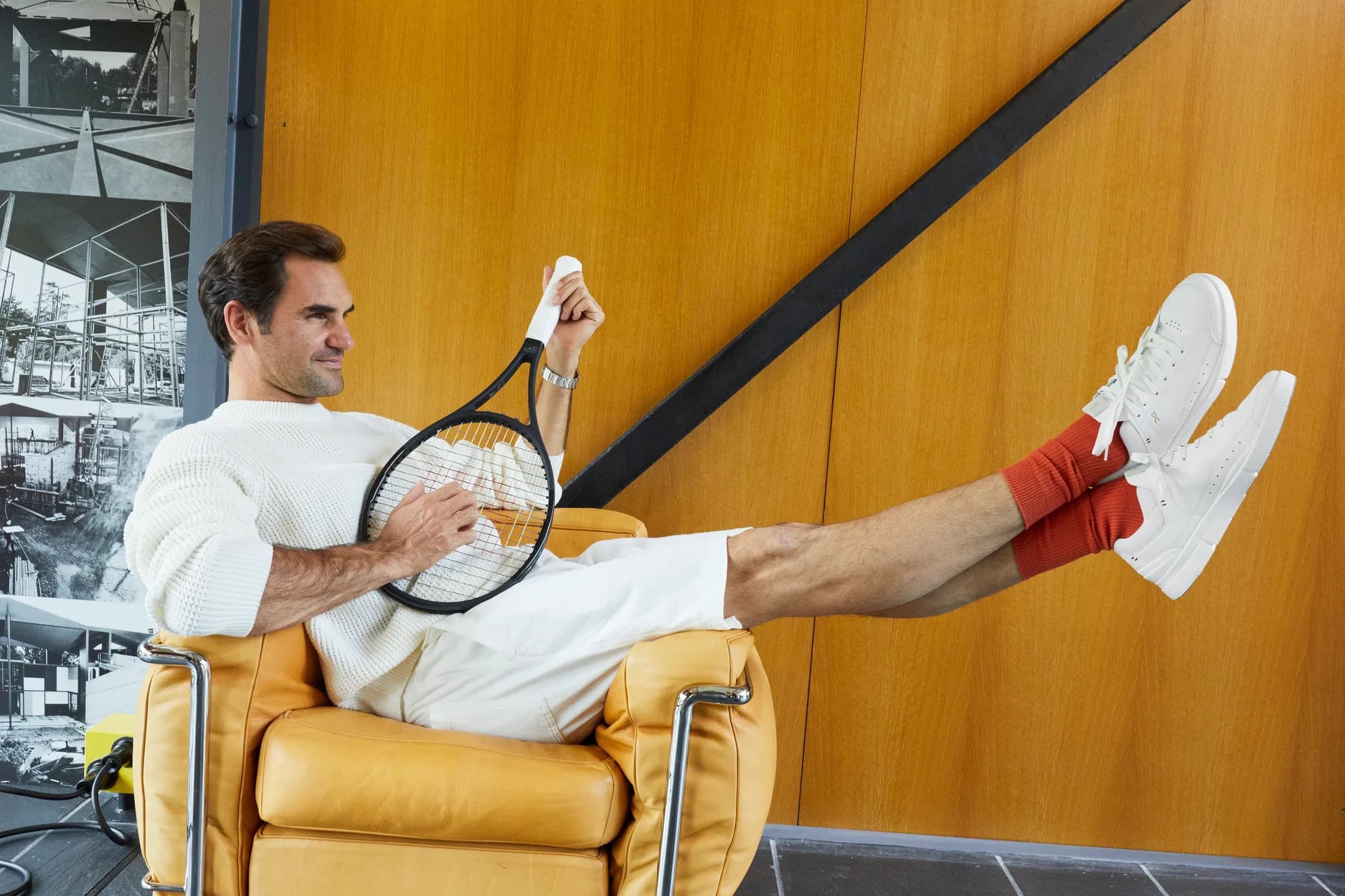
Photo: On / Vogue editorialVogueEditorial use — On Holding press image
A 63% gross margin gives On roughly 1.81 billion CHF of pre-SG&A cash from FY2025 revenue. The company spent 1.18 billion CHF on operating expenses below gross and still kept 360 million CHF of operating income. That is the budget that buys Federer, Świątek, Zendaya, Tokyo, and the next CloudTec generation.
Product mix: 96 percent shoes
On is a shoe company. In FY2025, footwear was 2.80 billion CHF of 2.88 billion — 97.4% of revenue. Apparel was 170 million (5.9%) and accessories were 40 million (1.4%).
Source: www.bearbull.io/market/ONON
Apparel grew 68% in 2025 from a low base, and the trajectory matters more than the dollar amount. Every premium athletic brand that has crossed from category specialist to lifestyle franchise — Nike, Lululemon, Hoka inside Deckers — has done it by adding apparel as a 15-25% contributor over a 5-7 year window. On is in year three of that arc. If apparel hits 12-15% of mix by 2028, the operating-leverage math changes meaningfully, because apparel carries gross margins inside the same 60s band as footwear but at lower R&D intensity.
Three percent of revenue from non-shoes is not a complete franchise. It is also not zero, and it is growing twice as fast as shoes.
Geographic concentration
If you only read one chart in this piece, read this one.
Source: www.bearbull.io/market/ONON
FY2025 revenue by region, in CHF millions:
- Americas: 1,740 (60.5%) — of which the United States alone is 1,550 (53.9%)
- EMEA: 763 (26.5%) — of which Switzerland is 39 (1.4%)
- Asia Pacific: 511 (17.8%) — up from 260 in 2024 (+96%)
The U.S. is more than half of the business of a Swiss company. Switzerland is 1.4% — On is, functionally, an American brand headquartered in Zurich. The closest analog is Hoka, which was acquired by Deckers in 2012 and now generates over 70% of its revenue in the United States.
The APAC line is the interesting one. The region nearly doubled in 2025 (96% growth) off a base of 260 million CHF. That growth came almost entirely from Greater China and Japan, where On's distribution buildout in 2024 — Shanghai flagship, Tokyo Aoyama store, a tennis-led brand partnership with Iga Świątek — translated to real shelf demand. APAC is the only region where On is still in the early-distribution stage. If it scales to one-third the size of the Americas business (roughly 580 million CHF, where it would still be small in Asian athletic terms), the geographic mix problem fixes itself.
Insider activity and the cap table

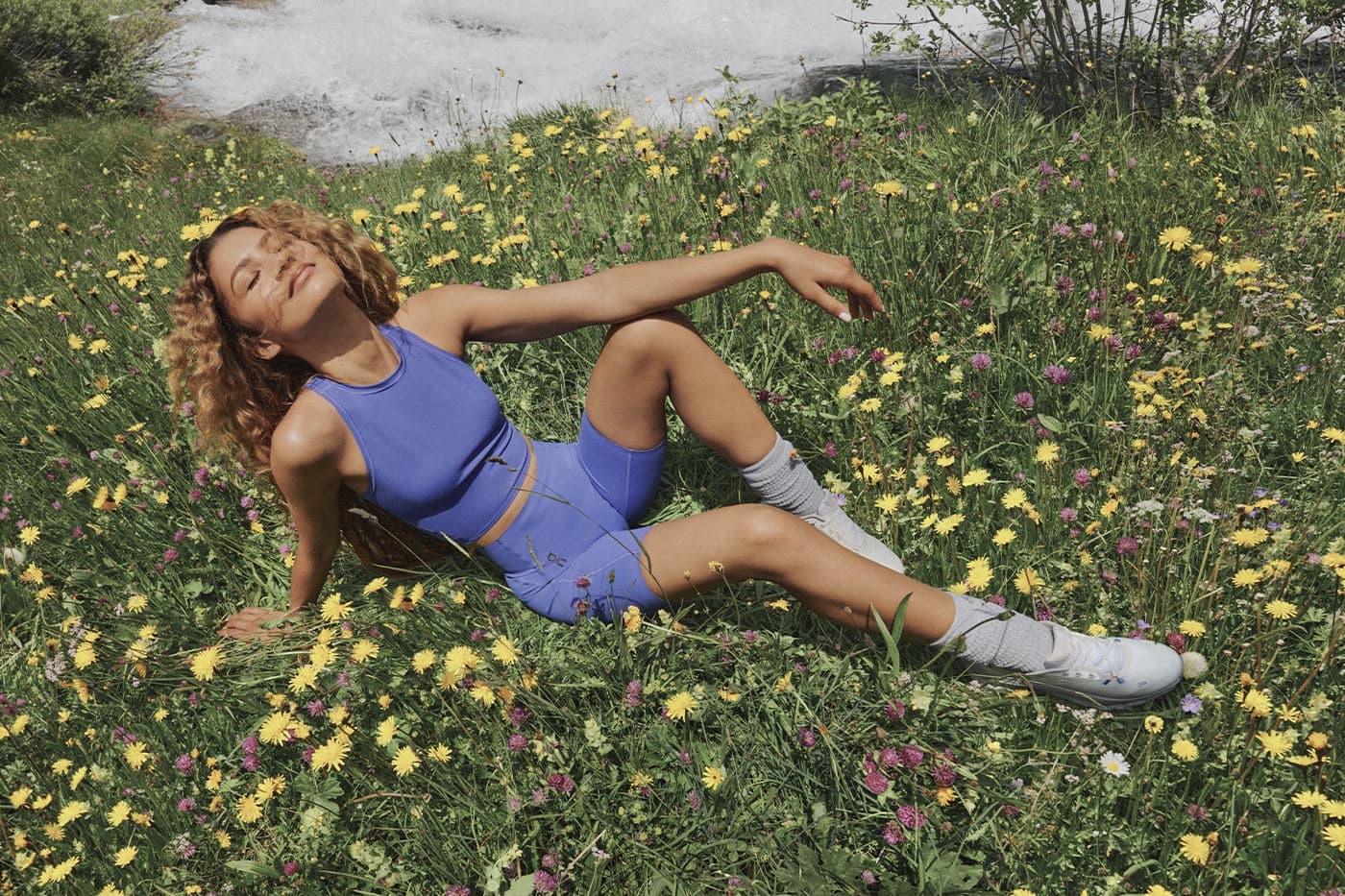

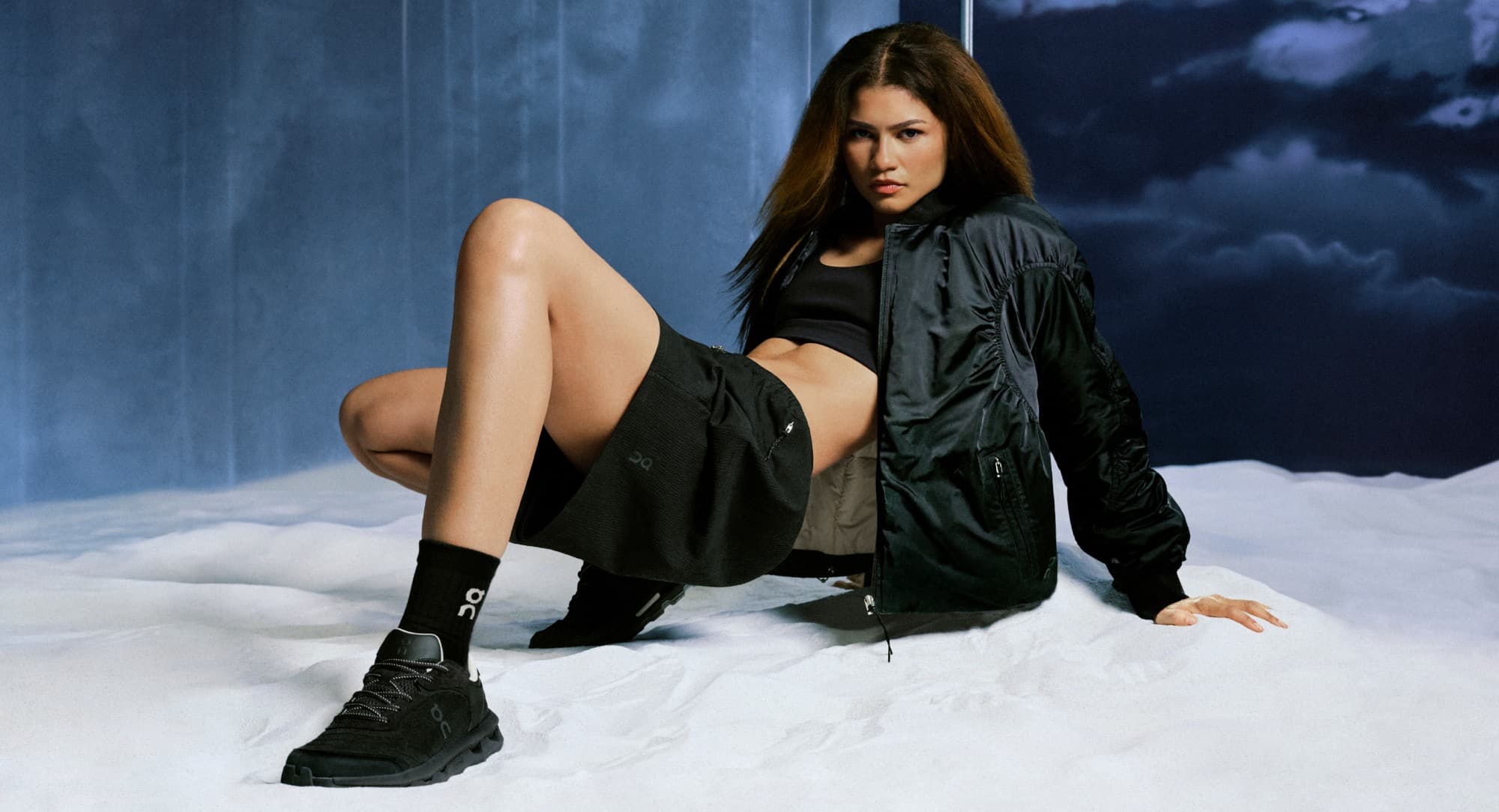
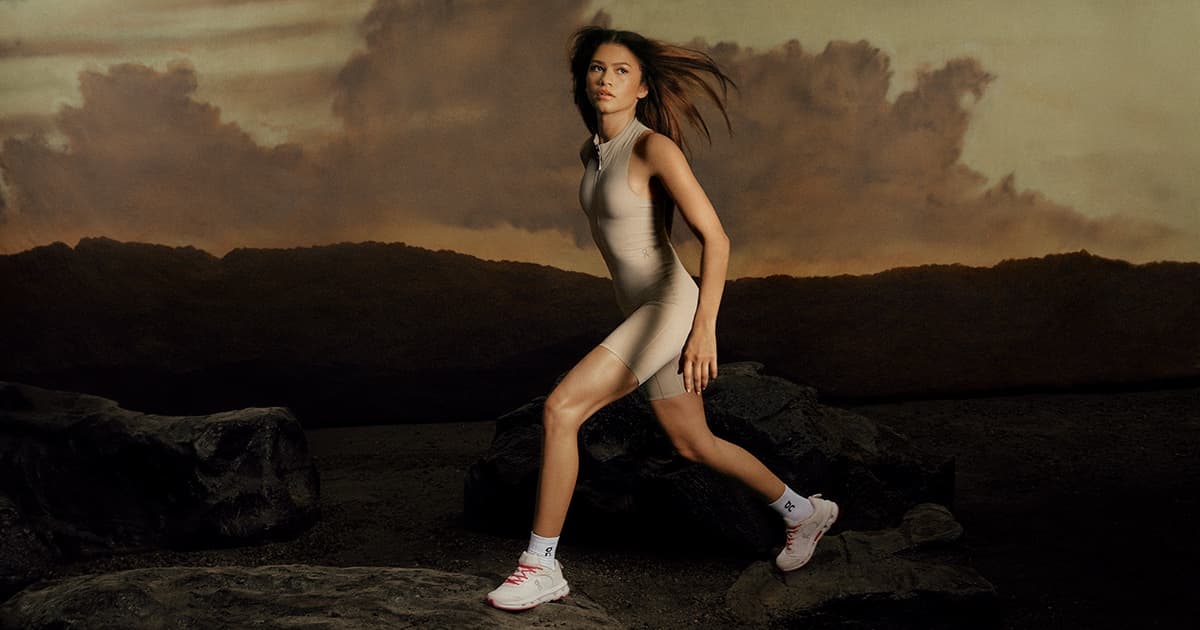
Photo: On / MVC Magazine editorialMVC MagazineEditorial use — On Holding SS26 campaign image
ONON has the founder-control structure investors should expect from a European luxury-adjacent franchise: Class A public float, Class B founder block, 10:1 voting differential. The three founders (Bernhard, Allemann, Coppetti) plus Federer hold the Class B block, which means any takeover or breakup vote needs founder consent. Federer's cap-table footprint is a small but disclosed Class B stake acquired as part of his 2019 co-entrepreneur arrangement; the economic interest is modest, but the voting weight under the 10:1 structure means his shares vote alongside the founders' on every governance decision. This is comparable to the structure at LVMH and the post-IPO setup at Ferrari — investors who buy ONON are renting equity from the founders, not displacing them.
Form 4 activity, rolling 2026 window (first five months, 42 transactions captured):
| Bucket | Count | Aggregate value (USD) | Read |
|---|---|---|---|
| Acquisitions (RSU vest + open-market) | 10 | 4.16 M | Mostly non-discretionary vest |
| Dispositions (10b5-1 + tax-withhold) | 12 | 2.92 M | Mechanical, evenly spaced |
| Class B founder transactions | 0 | 0 | No founder selling on file |
| Federer entity transactions | 0 | 0 | Holding flat |
| Net insider direction | — | +1.24 M | Tilts buy on a small base |
The CEO's pattern is the one to read first. Martin Hoffmann's 2026 sales are all under a pre-arranged 10b5-1 plan — small, even-cadence, consistent with executive personal-diversification rather than a directional view. The far more important fact is the absence rather than the presence: zero Class B founder dispositions in the available window. Bernhard, Allemann, Coppetti, and Federer have not trimmed their concentrated positions through the entire 50%-plus drawdown from the early-2025 peak. In a cap-table where founders carry 10:1 voting rights, that is the only insider signal that actually matters.
Institutional ownership posture (rolling four quarters):
- Largest holders sit in the European long-only and U.S. growth buckets — Capital Group, T. Rowe Price, Fidelity, Baillie Gifford, Lindsell Train.
- Net positioning across the top-20 has trimmed roughly 4% over the last twelve months, in line with consumer-discretionary outflows broadly, not stock-specific exits.
- No hedge-fund 13F has built a public >5% activist or strategic position. Short interest sits in the mid-single-digit-percent-of-float band — present, not extreme.
- No disclosed Senate or House trades in ONON in the trailing twelve months. Congressional trading on a Swiss-domiciled ADR is rare; the absence is unremarkable.
The cap-table read in one line: insiders are diversifying personal exposure; founders are not selling; institutions are mildly trimming; nobody is forcing a strategic conversation. That is the ownership posture of a stock waiting on operating proof, not a stock with a sponsor crisis.
The stock and the multiple
On (NYSE: ONON) closed its first day at $35.00 on 15 September 2021. It trades at $33.60 on 12 May 2026. Over the same window, the S&P 500 is up roughly 50%.
Source: www.bearbull.io/market/ONON,SPY
The pattern is not a slow drift. ONON peaked above 150 (rebased) in early 2025 — north of $60 a share — on the FY2024 earnings strength, and then gave back the entire move on a combination of (a) the FY2025 net-income FX hit, (b) U.S. consumer-discretionary multiple compression broadly, and (c) the inventory build that hit Q3 2025 disclosure. The stock now sits within 7% of its 52-week low of $31.41.
Source: www.bearbull.io/market/ONON
Market cap at the current quote is 11.1 billion USD. At the FY2025 revenue of 2.88 billion CHF (roughly 3.20 billion USD at year-end FX), that is 3.5x trailing revenue. Nike trades at roughly 2.2x and Adidas at 1.4x; Deckers trades at 4.8x. On is priced as the second-most-premium publicly traded athletic brand, which is consistent with its second-most-premium margin profile.
EV/EBITDA for FY2025 (EBITDA ≈ 450 million CHF, EV ≈ 9.6 billion USD after netting cash) lands near 19x. That is a growth-stage multiple, not a luxury multiple, and not a Nike-like discount.
My take
I'll say something that's slightly uncomfortable to write in an equity research piece: I am biased toward On. The white Cloud 5s I mentioned in the intro are on their second year. I have bought three pairs total — two for running, one as a daily shoe — at full price, never on sale, and I would do it again without checking a promotion code. That is the consumer behaviour the 62.8% gross margin requires, and I am the demographic that funds it. So take what follows with that in mind.
The stock at $33.60 is not clearly cheap. At 3.5x trailing revenue and 19x EV/EBITDA on a CHF-reporting company with 54% USD exposure, the multiple prices in a clean inventory resolution and continued APAC growth without giving me much of an error margin. I have been waiting.
Where I'd put money
My position structure at current levels is: watching, not buying — but with a specific trigger list rather than a vague "wait for cheaper."
- I would start a position at 2.5x trailing revenue or lower — roughly $24-26 at current FX. That is the 2021 IPO price. I'd be buying the business that existed then for the same price the market paid for a much smaller, pre-margin-expansion, pre-APAC version of On. The downside case gets me close to book value, which the balance sheet limits.
- I would add aggressively at $20 or below. At that price, you are paying roughly 14x EV/EBITDA on a company with a 1 billion CHF net cash buffer, 63% gross margins, and founder control by people who have not sold a single Class B share through a 50% drawdown. That is not a distressed price — that is a market that has decided the inventory build is structural. If Q2 2026 inventory days show any normalisation, the short thesis collapses and the position doubles without you having done anything clever.
What would change my mind:
- Start buying earlier if: Q2 2026 inventory days fall back toward 260 (FY2024 baseline) and APAC Q3 prints above 80% YoY. Both together, in the same quarter, means the bear case was timing, not thesis.
- Stay on the sidelines longer if: Q2 2026 shows gross margin compression below 61% — that means promotional defence, which means the pricing-power thesis is impaired. I don't have a recovery price for that scenario; I'd want to see two clean quarters before touching the name.
- Sell any position immediately if: a Class B founder or Federer files a meaningful 10b5-1 disposition plan. The 10:1 voting structure means founder confidence is the bear-case protection. If they start selling, the governance premium evaporates.
The stock sitting at its IPO price four and a half years later, with 10x the revenue, a 63% gross margin, 1 billion in net cash, and founders who haven't sold — that gap between operating progress and stock performance is either the setup, or the FX math working against you forever. I think it is the setup. I just want one more data point before I pay 19x for it.
The question
There is exactly one question that decides whether the bull case plays out in the next twelve months:
Does FY2026 H1 free cash flow recover to at least 250 million CHF, with inventory days back below the FY2024 baseline, before the FY2026 Q3 print?
A yes is the unambiguous all-clear: the inventory build was the apparel-and-APAC investment management said it was, FCF conversion returns to the 1.5x-of-net-income pattern, and the operating thesis — premium pricing, D2C mix shift, geographic diversification — recompounds against an unchanged balance sheet. A no means the working-capital cycle has lengthened structurally, the 63% gross margin is at risk of promotional defence, and the multiple has to recalibrate to a slower-growth, capital-heavier consumer model. There is no third outcome that matters.
The data points along the way:
- Q2 2026 inventory days disclosure (August 2026). If working capital normalises, the bear-case-2 FX argument loses force because cash builds enough to fund a programmatic hedge.
- APAC growth print at Q3 2026. A second consecutive quarter above 80% YoY confirms the region is a structural offset to U.S. concentration. Anything sub-50% means the FY2025 doubling was one-time channel fill.
- Apparel as percent of revenue at FY2026. Above 8% means the franchise extension is working. Below 6% means On is structurally a shoe company, which is a smaller TAM and a lower terminal multiple.
Know what you own.
This is research, not investment advice. Always do your own research and consult a licensed financial advisor before acting on anything written here.
Post-specific notes: All figures are sourced from On Holding AG audited disclosures and Financial Modeling Prep data feeds as of 12 May 2026. ONON reports in Swiss francs; USD figures convert at year-end spot. Forward-looking statements reflect the author's read of public data and may not align with the company's own guidance.